Silvertrac vs Attlock: Guard Tour Software Compared
Table of Contents
- Guard Tour Software in 2026: Why Your Platform Choice Matters
- What Silvertrac Does Well — and Where It Stops
- Checkpoint Scanning and Basic Officer Tracking
- Incident and Issue Reporting
- The Gaps That Surface as Your Operation Grows
- How Attlock Covers the Complete Security Operation
- NFC + QR + GPS: Triple-Verified Patrol Adherence at 93%
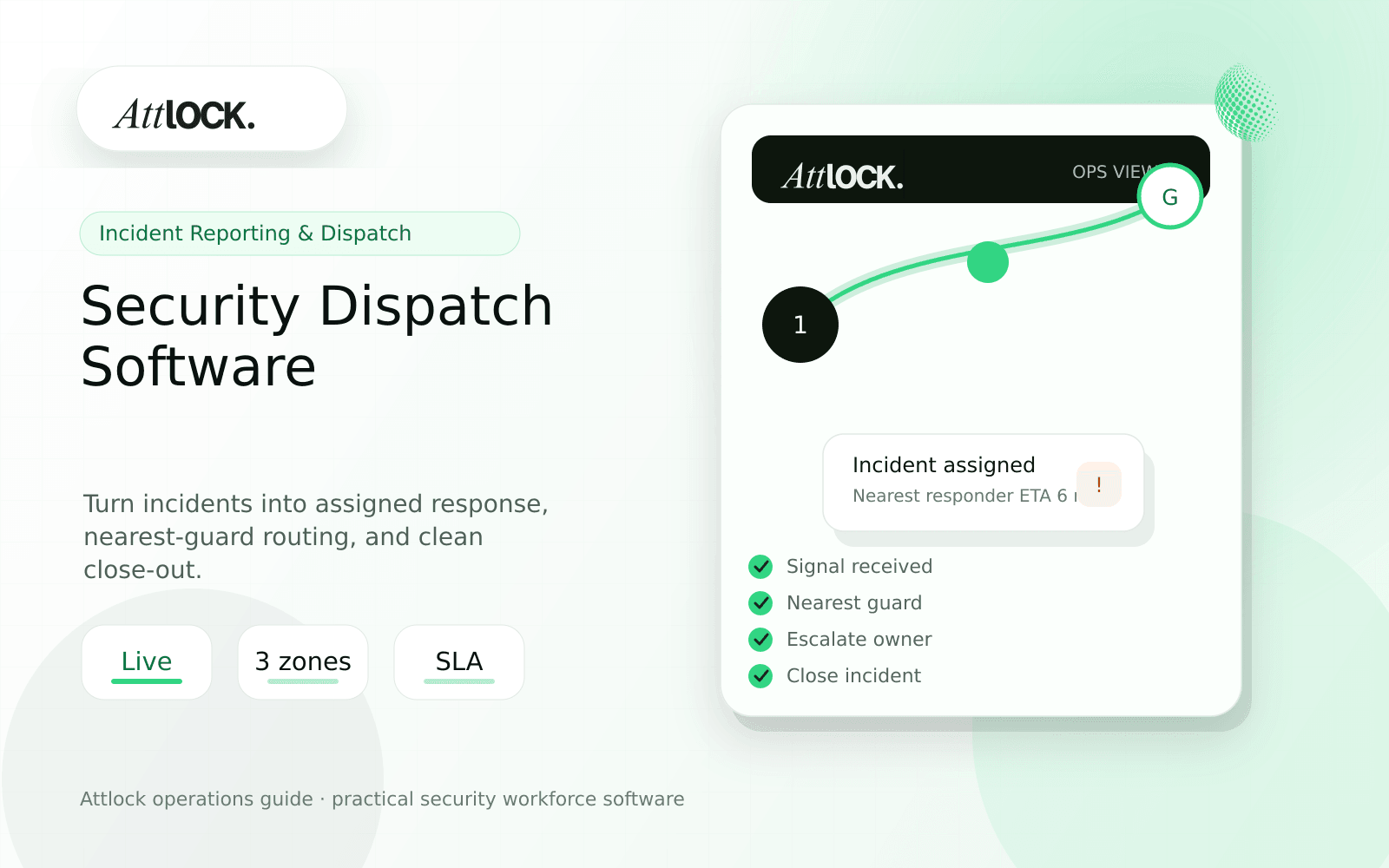
- Live Command Center and One-Click Dispatch
- Smart Scheduling That Saves 80% of Your Scheduling Time
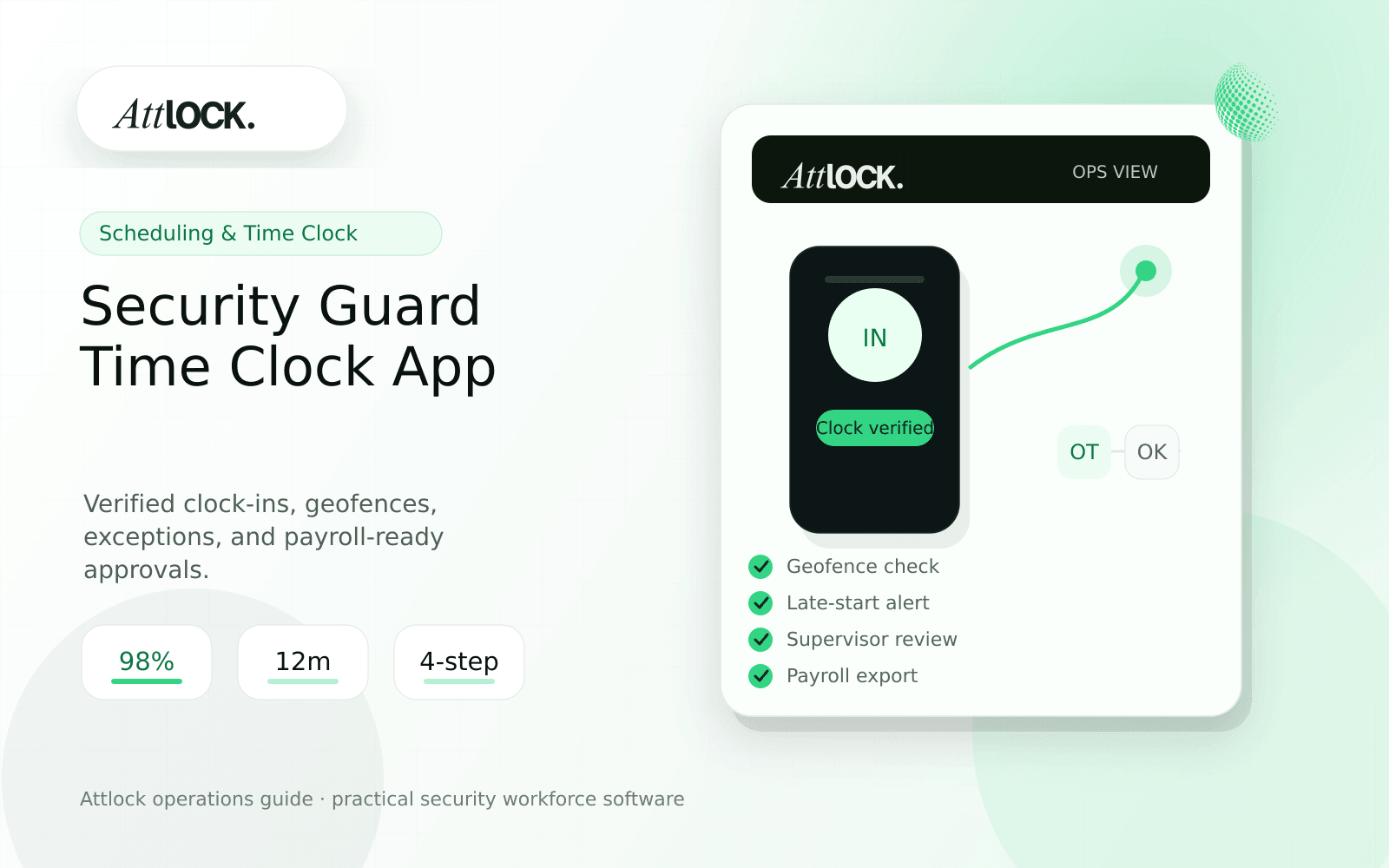
- Geofenced Time and Attendance With Zero Buddy Punching
- Real-Time Client Portal That Cuts Check-In Calls by 50%
- Side-by-Side: What Each Platform Actually Covers
- Pricing: Per-Site vs Per-Officer — A Real Cost Difference
- Choosing the Right Platform for Your Security Operation
- Operational Rollout Notes
- Configuration Table
- Supervisor Checklist
- Related Attlock Workflows
- FAQ
- What should buyers test before using this workflow?
- How should teams measure success?
Share Article
Guard Tour Software in 2026: Why Your Platform Choice Matters
When security company owners evaluate guard tour software, the conversation usually centers on a single question: can this system prove my guards are completing their patrols? Silvertrac has built a strong reputation answering that question for years. But as security operations scale — managing multiple sites, dispatching guards in real time, automating client billing, and keeping facility managers informed without constant check-in calls — a focused guard tour tool starts revealing its boundaries. This comparison breaks down exactly what Silvertrac does well, where it stops, and how Attlock addresses the full operational picture that growing security firms actually need in 2026.
What Silvertrac Does Well — and Where It Stops
Silvertrac's core strength is guard tour documentation and basic incident reporting. For security companies whose primary workflow is confirming officer rounds and logging issues, it is a competent tool that has served smaller operations well. Understanding what it does effectively helps clarify where the gaps emerge as operational demands grow.
Checkpoint Scanning and Basic Officer Tracking
Silvertrac supports QR code and NFC checkpoint scanning with GPS verification. Officers scan checkpoints during patrol rounds, and supervisors can review scan activity after the fact. The mobile app allows guards to log their progress, and reports can be generated showing which checkpoints were completed. For a straightforward guard tour use case at a single site or small number of locations, this covers the fundamental requirement that most security managers start with.
Incident and Issue Reporting
Officers can file incident reports from the mobile app with photos, notes, and timestamps attached to a location. This creates a basic paper trail for events that occur during a shift. For companies whose reporting needs do not go beyond officer-submitted logs and simple documentation, Silvertrac's reporting module functions adequately within this narrow scope.
The Gaps That Surface as Your Operation Grows
The limitations of a guard-tour-first platform become clear quickly once you look beyond patrol verification. Silvertrac does not offer a live command center with map-based guard visibility and one-click dispatch. When a panic alert fires or a client calls about an active incident, supervisors have no central operations map showing every on-duty guard's real-time position — and no way to dispatch the nearest resource with response time tracking built in. For firms handling time-sensitive incidents across multiple sites simultaneously, this is a significant operational gap that no workaround fully closes.
Silvertrac's scheduling capabilities are limited. Building full week schedules with real-time conflict detection, managing shift swap requests, publishing directly to guards' apps with instant notifications, and catching double-bookings or certification mismatches before they become problems are not core Silvertrac features. Operations managers at growing firms typically handle scheduling in separate spreadsheets or a third-party tool alongside Silvertrac, which creates data fragmentation and additional administrative overhead every single week.
On the business operations side, Silvertrac does not automate billing. Hours worked do not automatically generate invoices with per-site and per-shift-type billing rates. There is no integrated payment processing, no recurring invoice automation, and no one-click payroll export — which means a separate billing workflow and manual reconciliation remain. There is also no real-time client portal where facility managers can independently view coverage, access reports, and submit service requests, which forces security companies to field those status calls and emails manually every day.
How Attlock Covers the Complete Security Operation
Attlock is built as a unified security operating system — a single platform that covers guard tours, dispatch, scheduling, time and attendance, billing, reporting, and client transparency without requiring a separate tool for each function. Here is how it handles each area where Silvertrac leaves gaps, alongside matching or exceeding Silvertrac's core patrol capabilities.
NFC + QR + GPS: Triple-Verified Patrol Adherence at 93%
Attlock's patrol verification system supports both NFC tags and QR codes at checkpoints — matching Silvertrac's scanning options — but adds a critical third verification layer: every scan simultaneously captures GPS coordinates, a precise timestamp, and the device ID of the scanning phone. The result is a tamper-proof, immutable audit record that follows a sealed sequence: guard taps checkpoint, GPS is captured, timestamp is sealed, data syncs live, and the audit record is locked. There are no gaps that can be questioned in a client audit, an insurance claim, or a legal proceeding.
The platform supports ordered tours, meaning guards follow guided checkpoint sequences rather than scanning in any random order — a meaningful difference for demonstrating systematic, documented coverage to enterprise clients. Missed checkpoints trigger instant supervisor alerts, not just gaps discovered in a post-shift report. Scan activity analytics surface hourly patrol patterns through bar chart visualizations, enabling trend analysis and performance benchmarking across sites. Security companies on Attlock report a 93% average patrol adherence rate — a number that is directly presentable to clients as documented, verifiable proof of service quality.
Live Command Center and One-Click Dispatch
Attlock's Live Command Center displays every on-duty guard's real-time GPS position on a central operations map. When a panic alert fires, an incident is reported, or a checkpoint is missed, supervisors see it immediately on the same screen and can dispatch the nearest available guard with a single click. The dispatch workflow automatically tracks every status transition — dispatched, en route, on scene, completed — with timestamps logged for each step. Fleet vehicles are tracked and marked in-use during active assignments. The full ticket lifecycle creates a complete, timestamped audit trail that protects the firm legally and operationally. This category of capability does not exist in Silvertrac.
Smart Scheduling That Saves 80% of Your Scheduling Time
Attlock's scheduling module allows operations managers to build complete week schedules with real-time conflict detection — the system immediately flags double-bookings, rest-period violations, and certification mismatches before a schedule ever goes live. Shift templates let teams save and reuse common patterns across multiple sites. Coverage gaps and overtime accumulation are visible at a glance on week and day calendar grid views. Guards can submit shift swap requests directly in the app, which admins approve without leaving the platform. Publishing a finalized schedule sends instant notifications to every affected guard's mobile device. The documented outcome is an 80% reduction in scheduling time — for a firm managing 15 or more sites, that reduction compounds into hours recovered every single week.
Geofenced Time and Attendance With Zero Buddy Punching
Attlock's time and attendance system requires guards to be physically inside a defined site geofence to clock in, verified by GPS coordinates captured at every punch. This eliminates buddy punching entirely — a persistent cost and compliance problem in the industry. Anti-fraud logging records GPS coordinates and device ID at every clock event, creating a verified audit trail. Automated timesheets generate directly from actual verified clock data, not manual entries. Real-time overtime alerts fire before costs accumulate, and late or no-show alerts notify supervisors within configurable time windows so coverage gaps are caught immediately. At period close, payroll data exports to ADP, Gusto, or QuickBooks with one click.
Real-Time Client Portal That Cuts Check-In Calls by 50%
The client-facing portal is one of Attlock's most operationally impactful capabilities. Facility managers log into a branded, read-only view where they see live guard positions on a site map, the day's full activity feed, daily activity reports and patrol reports, guard performance ratings per shift, and a service request portal for submitting requests directly without calling or emailing the security company. Clients receive real transparency into the service they are paying for — on demand, at any hour. The outcome is a 50% reduction in client check-in calls, which translates directly into freed-up time for operations managers and consistently higher client satisfaction scores. No equivalent feature exists in Silvertrac.
Side-by-Side: What Each Platform Actually Covers
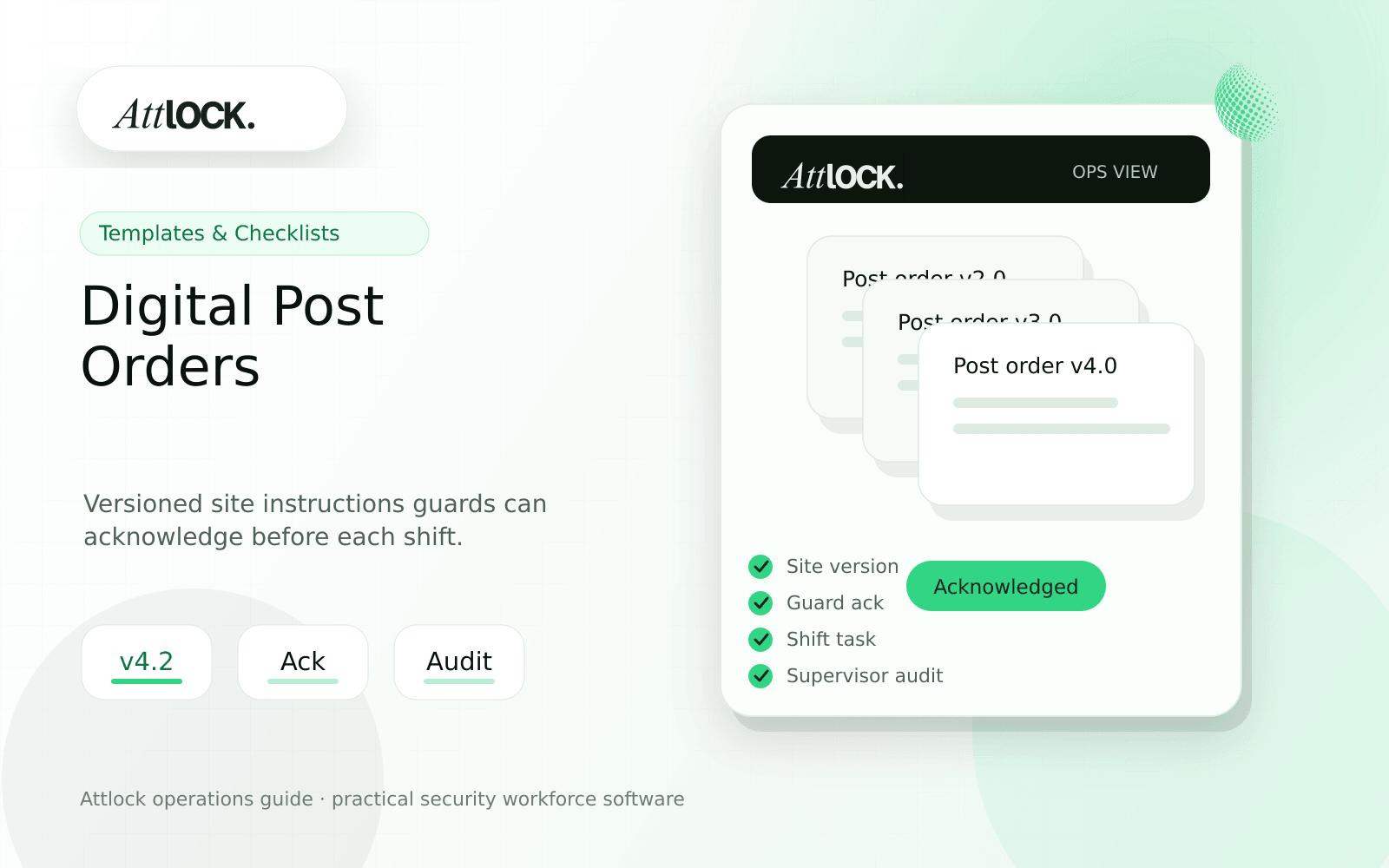
The functional scope of the two platforms differs substantially. Silvertrac covers guard tour checkpoint scanning, basic incident reporting, and officer location tracking. Attlock covers all of that — and extends to a live command center with real-time dispatch, smart scheduling with conflict detection and shift swap management, geofenced time and attendance with payroll export, automated billing and invoicing with integrated payment processing, the real-time client portal, digital post orders with per-guard acknowledgment tracking, fleet and equipment lifecycle management, visitor management with automatic watchlist matching, and a one-tap panic button with GPS-triggered lone worker safety alerts for every guard in the field.
Both platforms have mobile apps, but Attlock's are built offline-first — they operate fully without internet connectivity and sync automatically when connection is restored. For guards working in underground parking structures, large industrial facilities, or remote sites with unreliable signals, offline operation is not a convenience feature. It is a functional requirement that prevents data loss and operational failure. On incident reporting, Attlock supports six incident types, four priority levels, multimedia evidence including photos, video, and audio, automatic escalation rules, and audit-ready export formats for insurance and legal use. Guards complete daily activity reports in under 5 minutes using custom templates per site — compared to 45 minutes with manual paper-based processes — with an approval workflow that keeps every report accountable from draft to client delivery.
Pricing: Per-Site vs Per-Officer — A Real Cost Difference
Pricing structure matters as much as pricing level when evaluating guard tour software at scale. Silvertrac uses a per-officer pricing model, which means costs scale directly with headcount. For firms with large guard rosters spread across a moderate number of sites, per-officer pricing can become expensive quickly — and the cost grows with every new hire, regardless of whether operational complexity has increased.
Attlock prices per site, not per guard. Unlimited guards are included at every tier. The Starter plan begins at $40 CAD per month per site. Professional is $99 CAD per month per site, and Enterprise is $249 CAD per month per site. There are no hidden fees, and a free trial is available. For a firm managing six sites with 25 guards, the per-site model typically delivers substantially better unit economics than a per-officer model — and that cost advantage grows with every guard added to the roster. The per-site model also removes any financial disincentive to staffing up coverage at a location when client needs demand it.
Choosing the Right Platform for Your Security Operation
Silvertrac is a viable starting point for very small operations whose workflows are genuinely limited to basic guard tour verification and simple incident logging, and who are prepared to run separate tools for scheduling, billing, and client communication. For operations at that specific stage and scope, it addresses the floor-level requirement. However, each additional tool added to that stack introduces its own cost, data silo, and integration failure point.
For security companies managing multiple sites, growing headcount, or enterprise clients who expect real-time service transparency and audit-ready documentation — the case for a unified platform is straightforward. Attlock replaces five or more fragmented tools with a single system: guard tours, dispatch, scheduling, time and attendance, billing, client portal, reporting, and field operations management — all operating from one database with no duplicate data entry and no reconciliation gaps between systems. The 93% patrol adherence rate, 80% reduction in scheduling time, and 50% fewer client check-in calls are the operational outcomes security companies consistently achieve after consolidating onto one platform.
If you are evaluating Silvertrac alternatives and want to see a complete security operating system in action, Attlock offers a live demo at attlock.com/book-demo. The walkthrough covers the full platform — patrol verification, live dispatch, scheduling, automated billing, and the client portal — so you can evaluate it directly against your current operational requirements and ask the questions that matter for your specific sites and team. A free trial is available, and per-site pricing starts at $40 CAD per month, making it straightforward to test Attlock alongside your existing stack and measure the difference firsthand.
Operational Rollout Notes
A patrol workflow should show more than a completed route. Supervisors need to know what was scheduled, what was actually checked, what was missed, and what evidence is strong enough to share with the client.
Configuration Table
| Workstream | What to configure | Owner |
|---|---|---|
| Route design | Checkpoint order, required notes, photos | Operations manager |
| Field proof | GPS context, NFC or QR scan, timestamp | Guard or supervisor |
| Exceptions | Missed, late, skipped, or repeated checkpoints | Field supervisor |
| Client output | Route summary with exceptions and attachments | Account manager |
Supervisor Checklist
- Build routes around real risk areas, not just convenient scan points.
- Test the route after dark and during poor signal conditions.
- Require exception reasons for missed checkpoints.
- Separate supervisor review from client publishing.
- Compare GPS context with scan proof before promising accuracy.
- Review recurring missed points during weekly operations meetings.
Related Attlock Workflows
In Attlock, this connects naturally to guard tour system, live tracking, and client portal so the article turns into an operating workflow instead of a static note.
FAQ
What should buyers test before using this workflow?
Test one real site, one real guard workflow, one supervisor exception, and one client-ready output. If the process only works in a clean demo, it will create cleanup work after rollout.
How should teams measure success?
Measure whether supervisors can act faster, records are easier to review, clients receive clearer proof, and administrative cleanup drops after the first month.